The theory is pretty simple: the FAA only requires 40 hours of flying the airplane, but a typical private pilot in the Bay Area needs ~80 hours. Could we close that gap and save money using a flight sim? At ~$230/hour for a Cessna 172S, wouldn’t it be nice to shave off an extra 40hr * $230/hr = $9,200?1
I initially wrote about simulators in 2024 (How to Leverage a Simulator for Flight Training). The additional years of teaching have further clarified and generalized those ideas. This post provides a framework for students and instructors to reduce flight hours, optimize instructor time, and avoid future costs.
Three Questions to Consider
Theoretically, anyone could trim a bit of cost using a simulator. But honestly, if you’re able to land the airplane on your first try without any assistance… probably better to just stay in the airplane. If you’re like me, however, and topics like non-towered arrivals simply would not stick, a simulator can be very helpful.
When I’m reasoning through whether my students or I could save money using a flight sim, there are three questions I consider:
- Will this reduce the flight time we’ll need in an airplane?
- Will this be a more efficient use of instructor time?
- Will this create long-term problems that cost more later?
Reduce Flight Hours
Where could we cut back flight hours? The FAA provides a general framework.2
Procedural training for visual flight rules (VFR) operations can also be included in a syllabus or training course outline (TCO) for primary flight training. Procedural tasks might include traffic pattern operations, navigation, slow flight and stalls, control and maneuvering of an aircraft solely by reference to instruments, and emergency operations. – AC 61-136B
To put a more general framing on it, I’ve found simulators helpful for:
- Learning the procedures of a new flying skill with an instructor
- Practicing knowledge application generally, especially where your input causes a change in the situation
- Studying at home to rehearse a maneuver
Procedural Learning
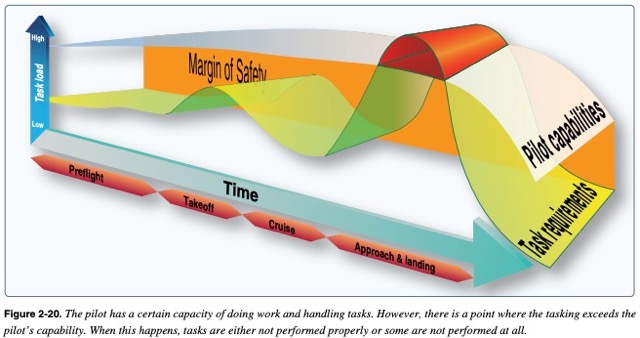
The four fundamentals are surprisingly procedural. They also occur early in flight training, where the aircraft environment is most overwhelming. Without excess mental capacity to learn a new skill, some learners struggle with the basics. And without the basics, the aircraft continues to feel overwhelming.
To break this cycle, a simulator can remove the overhead of the aircraft and focus on the procedural knowledge. The sight picture and feel and sounds will be all wrong, but the fundamental ideas of pitch + power = performance and attitude flying are still attainable.
Solo Knowledge Application
VOR navigation is an area that seems to be strictly knowledge based, but there is a procedural side that is easy to learn incorrectly. (How have you ID’d the VOR? Does your OBS roughly match the heading indicator?)
However, once you’ve learned the proper steps with an instructor, a simulator allows for solo experimentation until the skill is automatic. This is a great one to practice on your own.3
Solo Maneuver Rehearsal
While learning to transition from a crab to a sideslip, I first learned the basics with my instructor. Then I did block practice at home, resetting the simulator back to a 3-mile final with various wind conditions. It wasn’t until I had crosswinds up to ~15kt that everything clicked and future training flights made more sense.
Not only was the repeated practice good for my procedures, but it also allowed me to try conditions and degrees of difficulty that may not occur organically for a long time.
Optimize Instructor Time
A flight simulator has certain affordances that simply don’t exist in an airplane. These can be leveraged to make better use of an instructor’s time.
Consider:
- Staging a scenario that may otherwise be hard to find
- Skipping the overhead of getting to the practice area
- Pausing a scenario to create teachable moments
Staged Scenarios
I once had a magneto failure just after exiting IMC. The student remarked afterwards that it was the most educational flight they’d ever had.
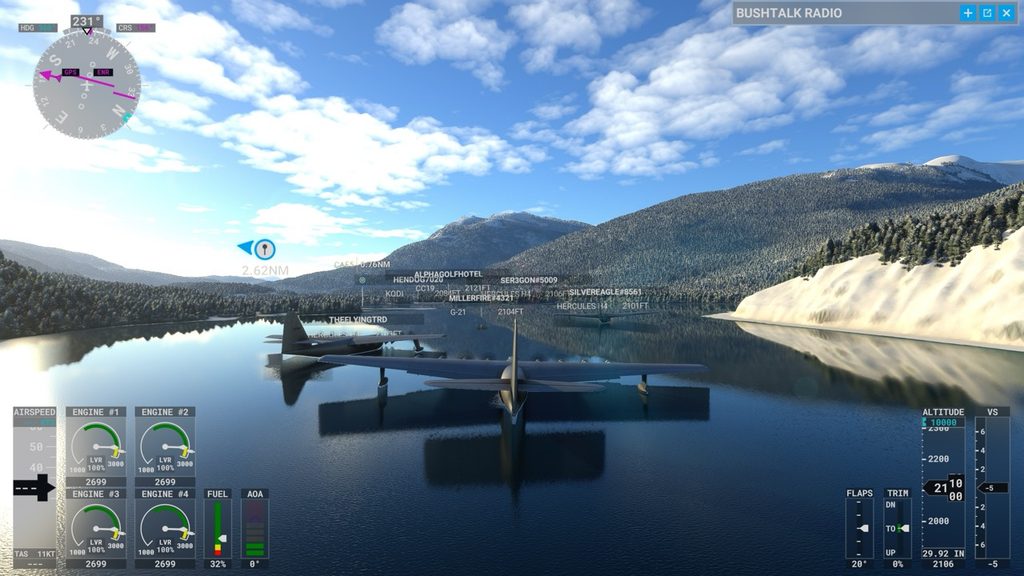
Experiences like that happen infrequently (fortunately), and most students will never encounter them. But a flight simulator allows an instructor to set up scenarios like this that would otherwise be dangerous or impractical.
Teleporting
No need to preflight, run up, or commute to and from the practice area. This saves a non-trivial amount of time each lesson.
Of course, you may want to practice these stages of flight in the simulator for other reasons. But for many topics, teleporting with a healthy airplane works just as well.
Pausing
You’re on the downwind in the airplane. Everything seems fine. You land, and your CFI asks what went wrong. Uh…
You’re on the downwind in the simulator. Everything seems fine. Just before you start to descend, your CFI pauses the simulator and stares at you. “What’s wrong?”, you wonder. They continue staring. You start to sweat, knowing something is happening RIGHT NOW that you’re supposed to do. Uh… Oh, GUMPS! You quickly bring the mixture in. The intensity4 of this moment stays with you for the remainder of your flying career. You never again forget GUMPS.
Avoid Future Costs
You may save money using a flight sim, but you can also incur future costs by creating bad habits.
I’ve seen two flavors of this problem:
- Misunderstanding of proper technique requires non-trivial retraining
- Learning faulty procedures when the simulator does not match the real airplane
While first learning a skill, make sure you’re doing it with an instructor. Then, after learning the proper method, home practice can be valuable to iterate without paying for instructor time.5
Wrong Technique
Improper use of trim falls into this category, as do many other items. Just because it can work doesn’t mean it will work in future situations.
With trim, sim pilots often pitch the plane up and down with trim. The proper technique requires the yoke to pitch the plane, while trim only relieves control pressure. The issue isn’t obvious until cross-country flying, though. Flying with trim is slow to stabilize, and there are too many other tasks going on to deal with a plane that keeps climbing and descending. Suddenly, you’re back in the practice area learning the four fundamentals again… Ouch.
Sim Doesn’t Match
Simulators are not perfect, though they get better with each release. Their implementation discrepancies can cause real issues when building a new skill.
Consider what happens when the airspeed indicator changes instantaneously in a simulator. This gives the impression that you can pitch to the right airspeed. In a real airplane, there’s a several-second lag, requiring you to pitch for a sight picture and let the airspeed stabilize over time.6
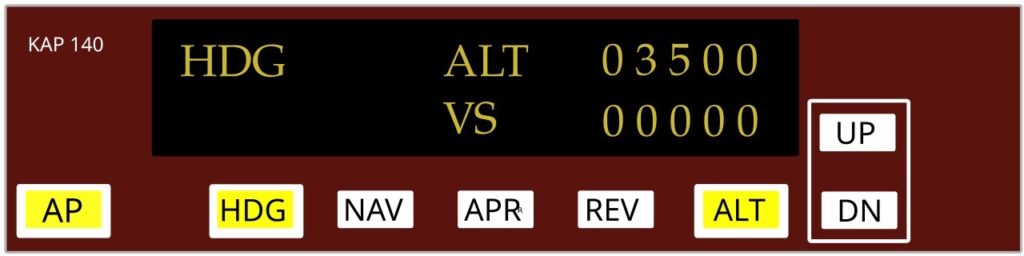
A more egregious issue also occurs: menus or systems may be implemented differently. Learning the KAP140 in MSFS was a waste of my time, as very little of it worked the same way in the airplane.
FAA Perspective
Generally, the FAA endorses the use of flight simulators for flight training, including for private pilot.
Most operational tasks and procedures for private pilot certificates… can be initially taught in an FFS, FTD, or ATD. – AIH Chap 9
and
The instructor adds flight procedures in the ground training environment. After the student has gained the required knowledge and understands the procedures, the instructor then adds practicing the psychomotor skills of the task. The instructor may do this by providing a simulated flight environment in a specifically approved ATD, flight training device (FTD), or full flight simulator (FFS). – AC 61-136B
What the Research Says
A Bit of Theory
The two key ideas are Positive Transfer and Transfer Effectiveness Ratio (TER):
Positive Transfer7
If the learning of skill A helps to learn skill B, positive transfer occurs
Transfer Effectiveness Ratio (TER)8
Measure of transfer effectiveness. A ratio of 0.5, for example, means 2 iterations in the simulator resulted in 1 fewer iteration required in the airplane.
It turns out most tasks learned first in the simulator produce positive transfer, but not every task has a good TER.
As long as there’s positive transfer on a task, you’re making forward progress. But nearly every task will (initially) require a flight instructor present, whose time is not free. This cost reality means a TER that is too low is not worth doing sim-first.
Cost Saving Analysis
Before getting too excited for this tool, be aware that this research primarily comes from flight schools,9 not Part 61 training, and it only applies to reducing flight time. Said differently, this tool only looks at 1 of the 3 areas suggested above (reduce flight time, optimize instructor time, and avoid future costs). Plus, the research did not tailor simulator use to a given student.
But it is great for building an intuition for what types of tasks research has found high TER for, and areas where you could reduce flight hours meaningfully. Plus, it’s fun to play what-if with these numbers.
So how much money could be saved? It depends largely on the TER. If each task had a TER of ~1.6, meaning each iteration in the simulator meant 1.6 fewer iterations in the airplane, then you really could save $9,200!10 But in practice, the measured TER is typically much lower, somewhere around 0.5 depending on the task.
Exploration Tool
This tool was written with Claude Code based on a few research papers to digest what-if scenarios. And to bring a healthy dose of reality, when tested in flight schools, one study found that pivoting their course to use ~25% simulator lessons cost ~2.2% more in the end than the standard curriculum.11
That said, many tasks have a high variance between individuals. This makes it hard to make sweeping curriculum decisions at a flight school. But as Part 61 instructors, we can individually identify when a learner might benefit from the sim.
This calculator needs JavaScript to run.
Its <script> block was removed, or rewritten so the browser never ran it.
The usual causes are a caching plugin’s “delay” or “defer JavaScript”
setting, Cloudflare Rocket Loader, a security plugin, or an account without the
unfiltered_html capability. Purge any page cache after changing one of those.
Does a simulator save money?
A simulator hour is only worth what it saves you in the airplane. Researchers call that the transfer ratio: airplane hours saved per simulator hour. It has been measured separately for each of the 34 private pilot test tasks, with results from −0.02 to 2.19. Set that ratio yourself, lesson by lesson, and follow the arithmetic.
This is a sandbox for thinking about the trade-off, not an estimate of what a flight school would charge. Real programmes have rarely shown savings like the ones you can produce here. Treat any number below as a what-if.
1 Pick an airplane
2 Choose your sim lessons
Every lesson starts at the ratio Embry-Riddle measured for it. Move either slider to use your own numbers instead. Transfer is airplane hours saved per simulator hour. Sim hours is how long that lesson runs in the simulator. The last two columns show the airplane time that removes and the net cost once the simulator time is paid for.
| In the sim | Lesson | Transfer | Sim hours | Airplane timesaved | Netafter sim cost |
|---|
—
| What you pay for | All airplane | Airplane + sim | Change |
|---|
What each lesson contributes
Dual time bills at the airplane rate plus the instructor. Sim time does too. Solo time is airplane only. Everything else is dues, the checkride, books, ground school, the written and the medical.
How to read this
Where the numbers come from
The starting transfer ratios are from an 18-month Embry-Riddle study. Macchiarella, N. D., Arban, P. K., & Doherty, S. M. (2006). Transfer of training from flight training devices to flight for ab-initio pilots. International Journal of Applied Aviation Studies, 6(2), 299–314, with the full task table in Macchiarella, N. D., Brady, T., & Lyon, B. S. (2008). Collegiate Aviation Review, 26(1), 66–75. Twenty students took 60% of a 69.7-hour curriculum in a Frasca 172 (an FAA Level 6 device with a 220° wraparound visual, which Embry-Riddle calls Level 6 Plus), having to reach PTS standard on a task there before attempting it in the airplane. They finished with about 28 airplane hours, against 18 control students who flew a Cessna 172S throughout. Transfer was positive for 33 of 34 tasks and statistically significant for 18. Roughly 9.75% of their measurements were missing and filled with group averages, concentrated in four weak lessons: lost procedures, diversion, rectangular course, and soft-field approach and landing.
Two whole-course studies give a wider frame of reference. Povenmire & Roscoe (1973), Human Factors, 15(6), 534–542, got 1.72, 0.91 and 0.68 for the first 3, 7 and 11 hours in a Link GAT-1, and put the point where the device stopped paying for itself between the fourth and fifth hours, at 1973 prices of $16/hr for the GAT-1 against $22/hr for the Cherokee. McLean, Lambeth & Mavin (2016), IJAP, 26(1–2), 36–45, got 0.47 across a whole PPL course from a Redbird FMX added to an existing syllabus at 25% simulation, though the hour difference behind it was not statistically significant, the 62 controls came from earlier cohorts rather than running alongside, and their simulator group finished about 2.2% more expensive.
Final Thoughts
When I first started as a flight instructor, I was hesitant to argue for simulator use in private pilot training. But now I’ve seen students save money using a flight sim for a variety of tasks.
When you or your students are thinking of using a simulator, consider if it can reduce flight time or optimize instructor time, or if it might cause more future costs. That’s one of the wonderful things about Part 61 instruction: every student is different, and instructors can tailor their teaching to best meet the learner where they are.
Are there other areas where you’ve had success using a simulator? I’d love to hear about them!
Happy simming (and flying!),
Jack
- What’s this? More unit magic? ↩︎
- There is a significant amount of research into which tasks are best learned in a simulator first. I’ve included more information from that theory in the sections below. ↩︎
- There’s significant overlap with chair flying, the difference here being knowledge that requires you to make changes to the systems and see the outcomes. ↩︎
- For a Plausibly Useful Idea in this blog post, the FAA defines the Law of Intensity as: “A principle of learning in which a dramatic or exciting learning experience is likely to be remembered longer than a boring experience”. That’s why it’s important to pour water on someone when you pay them back, so they never forget the debt has been paid. ↩︎
- Already flying with a simulator regularly? Don’t worry about this too much, the most common bad habits are breakable after a few lessons. And most topics don’t come up in the simulator, unless for example you’re trying to follow a full syllabus on your own without an instructor (in which case don’t do that!) ↩︎
- There’s also an argument that higher-fidelity simulators minimize some of these issues, which is partially true. You may not see issues like airspeed lag, but you’d still be unsure of the best practice for flying at a particular speed. ↩︎
- AIH Chap 3 ↩︎
- My academic background is killing me for this, but this definition is my own, based on reading several papers in this space. I’ve tried to distill it as best I can. For more, it is discussed and cited more deeply in (Macchiarella, Arban, & Doherty, 2006) ↩︎
- For instance, see Macchiarella, N. D., Arban, P. K., & Doherty, S. M. (2006). Transfer of Training from Flight Training Devices to Flight for Ab-Initio Pilots. International Journal of Applied Aviation Studies, 6(2), 299–314. ↩︎
- This is slightly different than the implausible number in the opening paragraph. In this case, we’re including the instructor time required while using the sim, where the opening statement was simply chopping off 40hrs flight time. ↩︎
- McLean, G. M. T., Lambeth, S., & Mavin, T. (2016). The Use of Simulation in Ab Initio Pilot Training. The International Journal of Aviation Psychology, 26(1–2), 36–45. https://doi.org/10.1080/10508414.2016.1235364 ↩︎